
THE UNIVERSITY OF SASKATCHEWAN’S MAIN CAMPUS IS SITUATED ON TREATY 6 TERRITORY AND THE HOMELAND OF THE MÉTIS.
THE UNIVERSITY OF SASKATCHEWAN’S MAIN CAMPUS IS SITUATED ON TREATY 6 TERRITORY AND THE HOMELAND OF THE MÉTIS.
TYREL ESKELSON
Opinions Writer
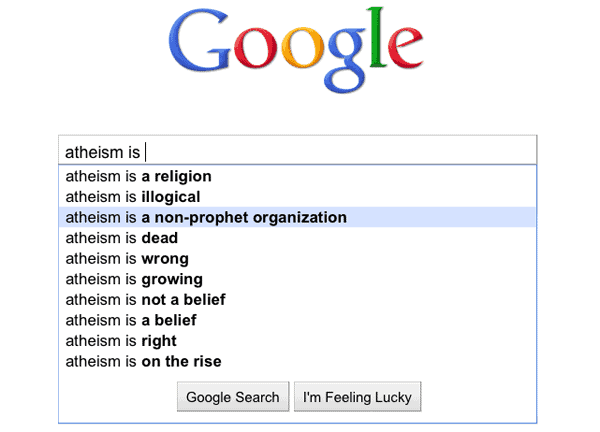
It is not my intention here to criticize religion (or promote my lack of it) but to address what I feel is a label that the word atheism carries. I want to bring the actual definition of atheism into the spotlight.
It is perhaps a deceptively challenging task because it seeks to detach stereotype from the word atheism by trying to speak for the entire population of people who identify with it. There is no singular attribute inherent to all atheists; one can not presume the politics of an atheist, their moral code, nor whether they are “good” or “bad” people. The term “atheist” has nothing to do with any of these convictions — all it says of a person is that they do not profess a belief in any deity.
It is perfectly reasonable to ask questions of an atheist about the origins of life. I would hope that humanity never loses this sort of curiosity, because it is what makes life interesting.
But I want to address the negative response one so often receives when declaring their identification with atheism. I have experienced times where this has resulted in a complete arrest of conversation. Why is it considered offensive for someone to not believe in a God? While it is not true of all people of a religious background, I have found that there is certainly a sub-set of people who are not happy unless I believe in their God as well.
This is the kind of discussion I am interested in having. I am not seeking pity. Freedom of religion and freedom from religion are two of the greatest principles humanity has yet to dream up, but these are not always practiced at the level of conversation between individuals.
I have never believed in God. There were times as a teenager when I thought about it and even tried, but just could not accept it. It took me until I became an adult to actually brand myself an atheist because for much of my life, I associated the word atheist with something bad.
During my high school years I recall a girl admitting to being an atheist during a class discussion. I remember thinking, “Wow, I can’t believe she said that.” But in an odd way, it did not place me on the defensive, because I realized that I had just been indoctrinated to associate atheism with nihilism, moral ambiguity, and so on.
These are the kinds of associations I wish to challenge. A poll done in 2008 found that one in four Canadians do not believe in God — or roughly 23 per cent of the population. And it is important to remember that nothing other than a lack of belief in God binds this diverse piece of our population together.
By all means, dear reader, challenge atheism if you wish. In fact I love the conversation. But please, don’t make assumptions about the qualities and traits of a person who does not believe in your God. I value things such as scientific inquiry, secular humanism, irony, emancipation of women and love reading Orwell, Dostoevsky and Marx — none of which a person would be able to foresee from my non-belief alone.
Atheism is a wonderful self-admission to those who identify with it. I don’t care if you do or don’t, just don’t assume you have an atheist pegged if you meet one.

Leave a Reply