
Stephen Harper’s troubling foreign policy

SHAWN KATZ
The Concordian

MONTREAL (CUP) ”“ Since coming to office, the Stephen Harper Conservatives have sought to break with Canada’s consensus stance on the Middle East, developed since the birth of Israel 60 years ago and held to by governments of both conservative and liberal stripes over the years. Where once we were a candid (and when appropriate, critical) friend of Israel, we have now become their stooge — and it is Canada’s international credibility that has suffered greatly as a result.
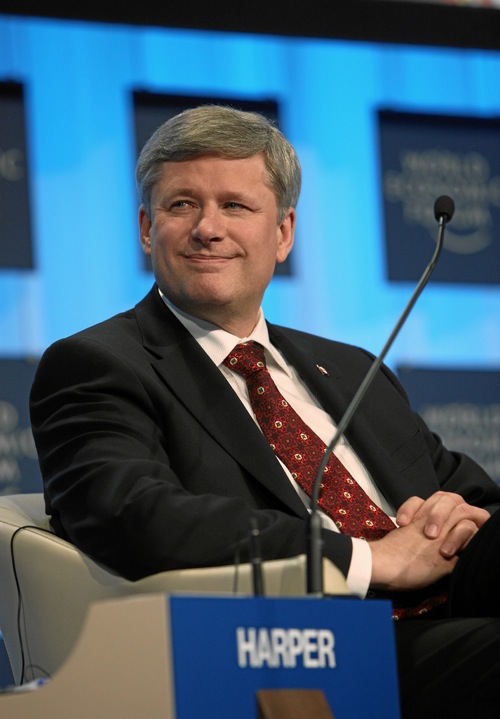
Harper’s latest tactics aimed at imposing his narrow pro-Israel agenda on the Rights and Democracy agency in Montreal is but the latest example of his heavy-handed campaign to realign Canada’s foreign policy away from the balanced position of past governments. The defunding of Kairos, a respected humanitarian group which operates in the Middle East, was equally an attempt to stifle any and all criticism directed at the Jewish state, even when such criticism came from Israeli human rights groups.

The Conservatives have even blanketed the ridings of Liberal MPs with objectionable flyers irresponsibly linking their nuanced criticisms of the Israeli state to anti-Semitism — even when those MPs are Jewish themselves.

All of which leads us to the palpable irony and paradox inherent in the Evangelical Christian-inspired “pro-Israel” movement, whether it be Harper and the Reform-Alliance wing of the Conservative Party here or George W. Bush and the Republican Party in the United States. Put simply, Israel is a democracy. Defenders of the Jewish state repeatedly point to this fact with near religious fervour to explain their unequivocal support of the country’s policies.

And yet, their defence of the state is, in and of itself, totalitarian in its drive to shut down legitimate debate of Israel’s actions; in truth, what we too often call the “pro-Israel” camp is actually pro- a particular segment of the Israeli population, namely the right wing represented by Israel’s prime minister Benjamin Netanyahu and his governing coalition of hardliners.

In smearing legitimate criticism of Israel’s government as anti-Semitic, the Conservatives are simultaneously smearing huge swaths of the Israeli (and Canadian) populations who rightfully object to actions carried out by a particular governing party within a democratic system.

Are the Labor and Kadima opposition parties in Israel, who together have ruled for most of the country’s history, anti-Semitic? Is the respected and progressive *Ha’aretz* newspaper, among the chief critics of Israel’s West Bank settlement policies, also anti-Semitic?

The inability of this basic absurdity to withstand even the most superficial prodding is a further sign of its ideological origins. What’s more, the consistent attempts by its proponents to narrow and suppress legitimate debate by smearing dissenters with charges of racism is proof only of the insecurity of their position and their incapacity to win a debate on rational grounds.

Harper’s new alignment with Israel has also aggravated tensions between the Jewish and Arab communities in Canada, which itself is certain to carry toxic implications down the road. Bringing Canadians together has never been this prime minister’s strong suit however, and true to type, the exacerbation of these domestic tensions doesn’t seem to faze him — especially if dividing and conquering can deliver him votes.

Canada’s once proud role of intermediary in the Middle East has also been sacrificed on the altar of Harper’s ideology. Our steadfast and unconditional support of Israel’s actions, no matter how questionable, has gravely undermined our credibility on issues of human rights, and has alienated many in the Arab world who considered us friends and allies.

For now at least, it seems Canada’s name generally still means something in Israel: fairness, justice, decency and goodwill. But a friend can only spit in your face and side with a foe for so long, irrespective of right and wrong, before they start to question the relationship’s worth. For Canada, this point is fast approaching — faster with every year the Harper government, guided by its dogmas, remains in power.

If Canadians care about our country’s good name in the world, about the unity of our people here at home, then it’s time to elect a government that places Canadian values of fairness and human rights above rigid ideologies, and who will uphold them equally and indiscriminately, regardless of race or religion.

- -
photo: Flickr


Social Networking

Follow the Sheaf on Twitter, Facebook and YouTube.

, , ,

  • pcourterelle

    The argument that the Harper government has resorted to totalitarian tactics in order to shut down debate and discussion of Israeli and Palestinian affairs is ludicrous on its face. It demonstrates that the author fails to understand totalitarian regimes or their tactics. It is a grotesque exaggeration.

    Using a few pamphlets (ten percenters in parliamentary lingo) to sway potential voters is hardly the same as using the full force of the state, including its military and paramilitary agencies, to “shut down legitimate debate of Israel’s actions.” Compare the mailing of a few pamphlets, which failed to find their mark politically, to the Liberal government of Ontario condemning international Israeli Apartheid Week this past Thursday.

    The claim that Harper’s support of Israel – which is neither unequivocal nor monolithic – is a manifestation of the Conservatives ‘Evangelical Christian’ wing is similarly spurious. Harper’s approach to the Israel and the Middle East Peace Process follows changes the occurred in the late Jean Chretien and Paul Martin governments.

    The belief that Canada was ever an “honest broker” in the Middle East is a romantic distortion of Canadian history. Pearsonian diplomacy in the Middle East was little more than Canada maintaining its position of influence between the United Kingdom and the United States in the post-war era. It is more accurate to say that Canada has preferred, since the mid-1980s, to take a back seat approach to Middle Eastern affairs and, as a result, that Canada has been forced to satisfy its interests there by other means.

    Some have gone as far as to argue that Canada’s role in the Israeli-Palestinian conflict, given our voting record at the UN, has been pro-Palestinian and that Martin’s and Harper’s changes have restored balance to Canadian foreign policy on this issue.

    Fence-sitting is no longer possible in the post-911 world. Furthermore, we cannot argue that the security of the state is paramount in Afghanistan and commit military forces to defend it against the Taliban while at the same time undermining the Israel’s ability to achieve the same against Hezbollah and Hamas. Denying Israel the right to pursue its security against its external threats would only undermine Canada’s role in Afghanistan.

    This is not to say that Israel deserves a diplomatic blank cheque from Canada. Canadian diplomacy in the region must be tied to well-defined national interests.

    At the end of the day, when people argue that Canada is too pro-Israel they mean that Canada is not pro-Palestinian enough.

    • foottothefire

      The alternate thesis advanced by pcourterelle in reply vacillates between spurious, fake and self-created, 'truths'.
      Harper is at the start of his self-proclaimed redirect of Canada and the equivalent of totalitarian regimes behind him. Compare him and his actions to date on the same time scale as some of history's more recent political thugs and Harper's totalitarianism shines through.
      … "comparing A FEW PHAMPLETS",????? How disingenuous of you. Those numbers reached into the thousands;
      "The claim that Harper's support of Israel – which is neither unequivocal nor monolithic"", I'd say Harper's support of Israel is measured as pretty unequivocal as demonstrated by his most recent,"regret", over more illegal development in Israel.
      "Regret", conveys about as much punch as a wet dish rag, wouldn't you say?
      "Some have gone as far as to argue…" is about as mushy, empty an argument as a Harperite ever has used. "Some", is like, "unnamed sources", "some say"; STRAWMAN or man of straw argument.
      Your thesis rings as hollow as any of Harpers timpani.

  • ishmael daro

    To the above commenter, pcourterelle:

    I think you’re misinterpreting the writer’s use of the word “totalitarian.” I doubt he means that the SS is kicking people’s doors down to silence dissent. It is clear, however, that the government’s commitment to Israel is absolute, which would probably have been a better word to use. The government’s position is that “an attack on Israel would be considered an attack on Canada,” as articulated recently by Junior Foreign Affairs Minister Peter Kent.

    The ten-percenters you’re referring to show that much of the bluster about Canada’s commitment to Israel is politically motivated, perhaps an attempt to sway Jewish voters away from the Liberal party that many of them have historically voted for. So if it’s done for electioneering purposes, why treat it like it is a legitimate and considerate foreign policy when it is done for purely political reasons. Also, the “Evangelical Christian” position on Israel is well-established, although I will admit that its influence in the Conservative party is not well-known, unlike its influence in the American Republican party. Stephen Harper is not yet wearing an Israeli flag pin under his Canadian one, like Sarah Palin does, so we’ll give that a pass.

    You also conflate the war in Afghanistan with Israel’s actions against Hezbollah and Hamas without explaining why the one should justify the other. Do you really believe that unquestioning support of Israel helps Canadian soldiers in Afghanistan when they are trying to establish their legitimacy with the local population and not be seen as an occupying foreign force? If anything it would hurt those efforts, but I maintain that the two are likely not linked.

    Of course Israel has a right to self-defence, but they do not have a right to occupy Palestinian territories, encroach further into those territories with unchecked settlement building, slowly annex East Jerusalem, and generally inflame the region with their aggressive militarism.

    Much of the criticism levelled against Israel is unwarranted and likely motivated by racist or anti-Jewish sentiments — but much of the criticism is not and is entirely legitimate. To say that “fence-sitting is no longer possible in the post-911 world” is a meaningless talking point. If the opposite of fence-sitting is unfair support for one side over another despite evidence that such a policy is foolhardy both at home and in pursuit of peace in the Middle East, then I am all for fence-sitting.

  • footothefire

    "Much of the criticism levelled against Israel is unwarranted and likely motivated by racist or anti-Jewish sentiments"…this is pandering hogwash.
    I suggest you research non-zionist Jewish sights to gain a real perspective on the accuracy of criticism aimed at Israel. There is a huge and growing community of Jews joining millions of voices world wide all denouncing a well documented ethnic cleansing being conducted by Zionists.