
THE UNIVERSITY OF SASKATCHEWAN’S MAIN CAMPUS IS SITUATED ON TREATY 6 TERRITORY AND THE HOMELAND OF THE MÉTIS.
THE UNIVERSITY OF SASKATCHEWAN’S MAIN CAMPUS IS SITUATED ON TREATY 6 TERRITORY AND THE HOMELAND OF THE MÉTIS.
MAIA BRITT ODEGAARD
The Peak (Simon Fraser University)
BURNABY, B.C. (CUP) ”“ The bees are disappearing, but no one is entirely sure why. Colony collapse disorder, as it is known, has several possible causes, but as of yet those in the beekeeping world still don’t have an answer.
It could be caused by global climate change, the result of mite infestations or it may just be a natural fluctuation that will right itself over time — though the latter seems rather naive. If things do not improve, bees may one day be extinct, like so many other species on this planet.
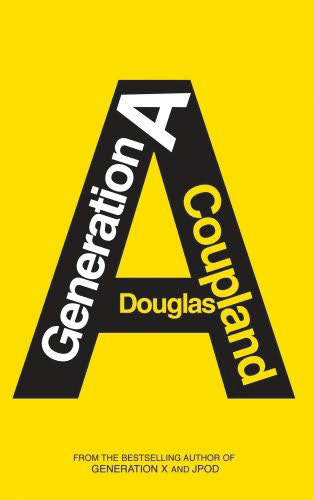
This is a reality in the world Douglas Coupland paints for us in his most recent novel, Generation A, and one that may soon be our own. In addition to a world with fewer bugs, he also describes a future in which fossil fuels are nearly depleted, the weather is erratic, people are never without PDAs (personal digital assistants) and the developed world is obsessed with a “non-narcotic protein” that speeds up the sensation of time passing and provides an escape from anxiety about the future and a sense of comfort in loneliness.
In a world without bees, children would no longer collect summertime memories of bee stings, and those with severe allergies might feel a sense of relief, but what about our agricultural industries? Honeybees are directly responsible for one-third of our food supply. While people could still grow their own flowering fruit and vegetable plants using methods of hand pollination, this would be impossible for mass production, rendering our diets highly limited: corn and potatoes, grain-fed poultry (cows graze in fields of clover and alfalfa — the most common nectar source for North American honey), other grains and dairy. No more blueberry muffins, almonds, strawberry yogurt, apple juice, butternut squash ravioli. You get the picture.
In typical Coupland fashion, his work is composed of slices of easy-to-digest prose, delivering another page-turner to his audience. Each section is narrated by a rotation of characters, each masterfully composed, compelling and relatable in his or her own way. Unlike many of Coupland’s previous works, Generation A has a diverse selection of settings: each of the five central characters comes from a different corner of the globe — though mostly the highly developed world, with one well-incorporated exception.
We begin our journey into this slightly frightening world with the least common of the five individuals: Harj. He starts out in Sri Lanka, but what links him to the West is his job — one he is fiercely dedicated to — as an Abercrombie and Fitch call centre operator. He is wise, and although he’s somewhat obsessed with an idealized dream of New England life, he has a droll stereotype of A&F’s most loyal customers, whom he refers to as Craigs.
Next we meet Zack, a sexy, crude Iowa corn farmer with a meth-infused upbringing and an uncle who takes care of him. He also earns a little money on the side by driving his tractor in the nude while on a web cam, fed live to a pervert named Charles.
Then there’s Samantha, an unsatisfied personal trainer who makes “earth sandwiches” with people directly opposite her New Zealand home; Julien, a greasy, immature World of Warcraft gamer in Paris, who would rather stay up in an Internet café for 23 hours straight than attend his classes at the Sorbonne; and finally, Diana, a churchy dental hygienist with Tourette’s from North Bay, Ont. — the oldest of the Wonka children and the only Canadian.
What do they all have in common? Well, they’re young, unhappy, single, sassy and — with random simultaneity — they’re each stung by bees. In a world where bees have long disappeared and the general state of things is bleak, these five individuals gain celebrity status thanks to the global village of the 21st century, and as none of them are alone at the moment of impact, news of their stings spreads quickly.
While their encounters bring a new sense of hope to a planet consumed by “chronosuppressant” protein tablets, the events that follow their stings only further illustrate this sad world, set around the end of this decade or the beginning of the next. However, as the group migrates, the novel morphs into a pseudo-collection of short stories and the reader is briefly transported out of an eerie reality. While Coupland has chosen to explore the tired topic of global climate change, his unique (and arguably very Vancouver) angle provides fresh perspective on an issue we all should take seriously: the future.
Leave a Reply