
THE UNIVERSITY OF SASKATCHEWAN’S MAIN CAMPUS IS SITUATED ON TREATY 6 TERRITORY AND THE HOMELAND OF THE MÉTIS.
THE UNIVERSITY OF SASKATCHEWAN’S MAIN CAMPUS IS SITUATED ON TREATY 6 TERRITORY AND THE HOMELAND OF THE MÉTIS.
ANNE-MARIE HICKEY
Special to the Sheaf
From 1885 to 1949, the Canadian government banned Pacific Coast potlatch ceremonies, a part of Aboriginal community heritage by which hereditary names were transferred.
As a result, families transferred hereditary names through small, private ceremonies within their homes. The secrecy of these ceremonies sometimes led to conflicts, tensions and misunderstandings among families over community rights and responsibilities.
“These hereditary names say who has an ancestral right to speak for and look after a community,” said Keith Carlson, University of Saskatchewan history professor. These names also determine property rights, access to fishing and berry-picking sites and ultimately govern the wealth of the community, he added.
Now, as part of a unique field school led by Carlson, U of S history student Stephanie Danyluk is helping the Stó:lõ tell the stories of their past.
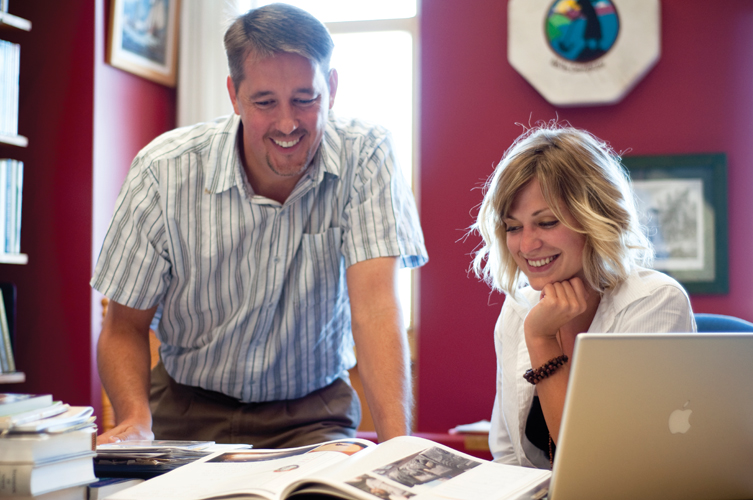
“There have been so many policies in place to erase or silence Aboriginal histories,” said Danyluk. “Their history was passed down orally and they lost that network to pass on their stories. They have to find new ways to do it.”
Danyluk is one of eight students who spent four weeks this summer with the Stó:lõ First Nation along the Fraser River in B.C. The students spent the first week living with a Stó:lõ family on a reserve and the remaining time on Stó:lõ Nation grounds where community buildings are located.
Funded by the U of S division of humanities and fine arts, Danyluk set out to help the Stó:lõ community record the history of two prominent elders, Joe and Irene Aleck, by putting together a biography and genealogy of their families.
Joe is a First Elder in the community and taught Stó:lõ culture on reserves for 12 years. Irene worked as a native liaison in prisons, women’s shelters and treatment centres helping individuals reconnect with their culture and spirituality.
“Stephanie helped Joe and his family communicate about the way names are transferred, the rights that go with those names, and the way that the Canadian Indian Act worked to pit families against one another,” said Carlson.
Danyluk had two goals as she spoke with them: to trace the use of an ancestral name that runs through Joe’s family and to record the rich family history of Irene.
Irene is related to two famous First Nation activists: Chief Dan George, the first Aboriginal Hollywood movie star; and Chief Joe Capilano, who set up an important meeting with King Edward in 1906 to draw the attention of the British people to the plight of Aboriginal people in Canada. Both relatives broke down barriers between Aboriginal and non-Aboriginal communities and contributed to Canadian history.
“The best part about talking to Irene and Joe was hearing about their community involvement,” said Danyluk. “They attended residential schools and it affected their culture, families, language and spirituality. Now they are helping revitalize that part of their culture that was lost.”
Carlson created the field school in partnership with the University of Victoria in 2002 while working at the Stó:lõ reserve as their historian. When Carlson moved to the U of S to teach, he brought half of the project with him.
Since then, 20 U of S students have participated in the program, contributing to Stó:lõ land claims and helping research such issues as the impact of area mining on the community’s fish and water supplies.
“It’s the only ethno-history graduate field school in Canada,” said Carlson. “The U of S is at the forefront of some of those initiatives which I think is really exciting.”
Danyluk’s work with Irene Aleck will ensure the Stó:lõ remember how her relatives contributed to Stó:lõ identity.
“The elders told us that now that we’ve heard these stories, it’s our responsibility to share them,” said Danyluk. “We weren’t just witnesses who were sitting and observing. We were a part of it.”
A copy of Danyluk’s research will be sent to the Stó:lõ people to be kept in their archives.
Anne-Marie Hickey is a student intern for the U of S research communications office. Visit usask.ca/research for more stories of student research.
– –
photo: Scott Bell
Leave a Reply